Who's the Best for 360-Degree Feedback: Lattice vs Heyramp
You're comparing 360-degree feedback tools and need a clear answer before you commit your team's review cycle to either platform. The wrong choice means tangled workflows and frustrated managers for quarters to come. This comparison cuts through the marketing to show which platform actually delivers on its feedback promises.
By the end of this article, you'll know exactly how HeyRamp and Lattice differ in feedback tools, goal alignment, and people analytics. You'll also see the pricing structures and get a definitive recommendation for your specific team size and review cadence, so you can make the final call with confidence.
Quick Verdict: HeyRamp vs. Lattice for 360-Degree Feedback
For teams seeking a simple, flat-fee 360-degree feedback solution, HeyRamp offers a compelling value proposition, while Lattice provides a more comprehensive but pricier suite for enterprise-scale needs. The core difference comes down to scope versus simplicity. HeyRamp focuses on making multi-rater feedback accessible and actionable without complex setup, while Lattice bundles feedback into a broader performance management platform.
HeyRamp stands out for its one flat fee pricing model, which removes the guesswork from budgeting. Instead of per-user or per-module costs, organizations pay a predictable rate. This approach is especially appealing for small to mid-sized teams that want professional 360-degree feedback tools without enterprise-level expenses.
Lattice, by contrast, typically offers a wider feature set that spans performance reviews, goal setting, and employee engagement. That breadth is valuable for larger organizations, but it often comes with a higher price tag and a longer implementation curve. Teams that only need focused feedback software may find Lattice more than they require.
- HeyRamp: Flat fee, built-in training, automatic compliance documentation, and instant coaching tips for managers.
- Lattice: Broader HR tool suite with performance management features, generally suited to larger, complex organizations.
- Best fit for HeyRamp: Small to mid-sized teams wanting fast setup and clear pricing.
- Best fit for Lattice: Larger enterprises needing integrated talent management across multiple functions.
HeyRamp also includes built-in training and education for participants, which helps teams run effective review cycles from day one. The platform is trusted by 20+ organizations and 400+ teams, indicating practical traction among growing businesses. Its guided conversation templates support difficult discussions, while aggregated people analytics dashboards give leaders a clear view of feedback trends.
For most small and mid-sized teams, HeyRamp delivers the essential 360-degree feedback experience with less complexity and more predictable costs. Larger organizations with deep performance management needs may still prefer Lattice's broader ecosystem, but they should expect to pay more and invest more time in configuration. If your priority is straightforward employee feedback, peer review, and manager review tools, HeyRamp is the stronger starting point.
At a glance: how HeyRamp compares to Lattice on the features that matter most.
| Feature | HeyRamp | Lattice |
|---|---|---|
| 360-Degree Feedback | ✓ | ✓ |
What Is HeyRamp?
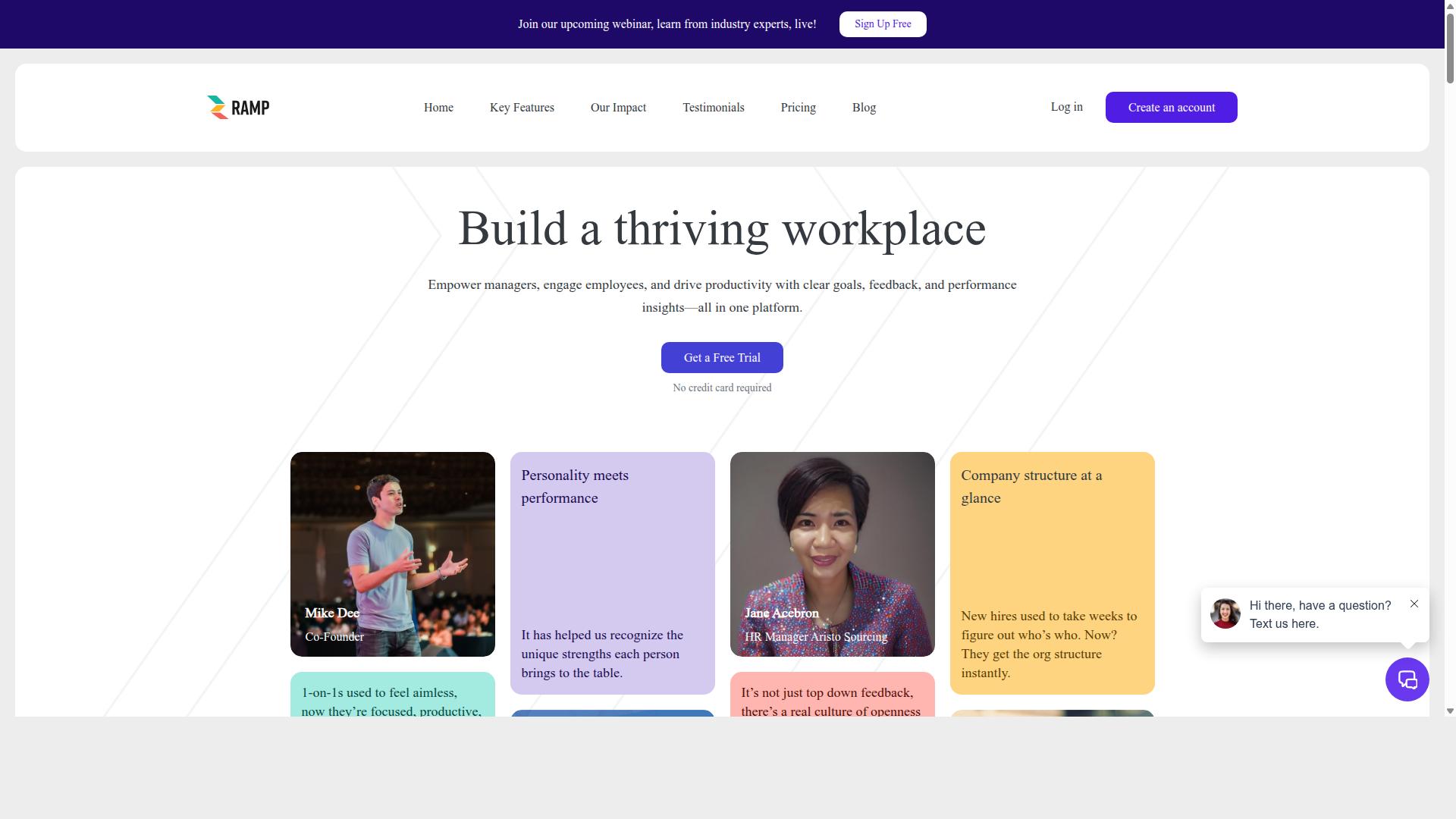
HeyRamp is a productivity software platform designed to streamline employee engagement, performance management, and workplace communication. It brings the tools managers need into one place, so teams can focus on growth instead of juggling disconnected systems.
The platform exists to give the power to managers and engage employees through a single, all-in-one solution. Instead of switching between separate apps for feedback, reviews, and development, teams work within one connected environment. That consolidation matters when you are trying to build a consistent performance management process.
HeyRamp supports the full cycle of team development. It includes tools for feedback, performance reviews, and ongoing employee development, all designed to keep people aligned with clear goals. The company's stated mission is to revolutionize how businesses manage teams by providing solutions that genuinely give the power to users.
For HR leaders comparing feedback software, HeyRamp positions itself as a practical alternative to more complex platforms. It is built for organizations that want structure without sacrificing simplicity, making it a strong candidate when evaluating tools for 360-degree feedback and continuous performance management.
What Is Lattice?
Lattice is a comprehensive performance management platform that helps organizations align goals, manage reviews, and develop employees. The platform is designed to bring multiple HR processes into one central hub, making it easier for teams to track progress and stay connected to company objectives.
Lattice is widely used by mid-market and enterprise companies that need structure across large, distributed workforces. Its reputation centers on being a full-suite talent management tool, covering performance reviews, goal setting, and employee engagement in a single interface.
The platform supports traditional review cycles alongside continuous feedback, which gives managers multiple ways to check in with their teams. Many organizations choose Lattice because it consolidates tools that would otherwise live in separate systems, reducing the administrative burden on HR teams.
For 360-degree feedback specifically, Lattice provides the framework to run multi-rater reviews. However, its broader scope means that some teams find the setup process more involved, especially when they only need a focused feedback solution.
Features Compared
Both HeyRamp and Lattice offer robust features, but they cater to different needs and priorities. Each platform covers the essentials of performance management, including reviews, goal tracking, and employee development. The real difference shows up in how those features are packaged and what each tool emphasizes.
HeyRamp positions itself as an all-in-one platform for feedback, reviews, and team development. Lattice is better known for its depth in performance and talent management. The following subsections compare specific areas so you can see which tool fits your 360-degree feedback process best.
We will look at feedback tools, goal alignment, and analytics. This breakdown should help you decide based on your team's actual workflow rather than marketing claims. Keep your own priorities in mind as you read through each comparison.
Feedback Tools and Performance Reviews
HeyRamp's feedback tools include 360-degree reviews, while Lattice offers similar with more advanced calibration features. HeyRamp supports the full review cycle with manager review, self-assessment, and peer review options. Its built-in training videos guide managers through 1-on-1s, performance reviews, and personality testing, which reduces the learning curve.
The 1-on-1 meeting tools in HeyRamp come with organized agendas and action tracking. These help managers stay consistent and follow through on talking points. Guided conversation templates and coaching tips appear right where managers need them, making difficult discussions easier to handle.
Lattice provides multi-rater feedback with calibration options that help leaders align ratings across teams. This is valuable for larger organizations that need consistency in performance appraisal. However, Lattice requires more setup and configuration to get the same level of guidance that HeyRamp offers out of the box.
HeyRamp emphasizes simplicity and built-in training, while Lattice offers deeper configurability for complex review cycles. If your team wants immediate usability with strong support, HeyRamp is the more practical choice. For teams that need heavy customization, Lattice may be worth the extra effort.
Goal Alignment and OKR Management
Lattice is known for its robust OKR and goal alignment features, while HeyRamp focuses on simpler goal tracking integrated with performance tools. Lattice allows teams to connect individual goals to company objectives with clear alignment visuals. This is helpful for organizations that run strict objective-setting cycles.
HeyRamp supports goal alignment within its performance management suite. It includes OKR and goal management with real-time progress visualization. Managers can see how team goals connect to broader company priorities without switching between separate systems.
The key difference is depth versus integration. Lattice offers more granular control over OKR structures and progress tracking. HeyRamp keeps goal setting connected to feedback and reviews, so you can tie performance conversations directly to what people are working on.
For teams that want goal setting to feel natural and connected, HeyRamp provides a streamlined experience. Lattice suits organizations that need advanced OKR administration. Consider how much complexity your team actually needs before choosing.
People Analytics and Actionable Insights
HeyRamp provides feedback analytics and personality insights, while Lattice offers deeper people analytics for workforce planning. HeyRamp aggregates people analytics dashboards that combine performance data with personality testing results. This gives managers a fuller picture of their team members in one view.
The personality insights in HeyRamp are integrated directly with performance tools. That means you can see how someone's natural work style might affect their feedback patterns. This is especially useful for 360-degree feedback, where understanding perspectives matters.
Lattice offers engagement surveys and trend reporting that support broader HR analytics. These tools help HR leaders spot patterns across the organization over time. That is valuable for workforce planning and long-term talent management strategies.
HeyRamp focuses on immediate, actionable insights that managers can use right away. Lattice provides broader analytics for strategic decisions. If your priority is helping managers improve quickly, HeyRamp delivers more practical value. If you need enterprise-level reporting, Lattice has the edge.
Pricing Compared
HeyRamp offers transparent, flat-rate pricing at $5 per seat per month, while Lattice's pricing is custom and typically higher for full features. This makes HeyRamp an easy choice for teams that want to know exactly what they are paying for without hidden fees or lengthy sales calls.
HeyRamp's pricing structure is simple and straightforward:
- $5 per seat per month when paid monthly
- $3 per seat per month when paid annually
- Enterprise pricing available at a custom rate per seat
- 14-day free trial with no credit card required
Every plan includes full access from day one, so your team can start running 360-degree feedback cycles immediately. You can also switch plans anytime, which gives growing organizations flexibility as their headcount changes.
Lattice, by contrast, does not publish its pricing publicly. Interested buyers typically need to request a quote, and the final figure depends on company size, feature selection, and the number of modules included. Because of this, we cannot provide exact figures for Lattice, but industry feedback suggests its full performance management suite costs considerably more per seat than HeyRamp's flat rate.
For organizations focused on 360-degree feedback, the cost difference matters. Many HR tools bundle performance reviews with features you may never use, driving up the price. HeyRamp keeps things lean, letting you pay only for the seats you need at a rate that works for both small teams and larger enterprises.
The 14-day free trial is another advantage. You can test the full platform, run a sample review cycle, and evaluate the user interface before committing a single dollar. No credit card means no risk, and the transparent pricing means no surprise invoices later.
When comparing pricing for 360-degree feedback software, HeyRamp's model wins on clarity and affordability. Lattice may offer a broader platform, but if your priority is a cost-effective, easy-to-adopt tool for multi-rater feedback, HeyRamp delivers more value per seat.
Who Should Choose HeyRamp
HeyRamp is ideal for small to mid-sized teams that need a straightforward, affordable 360-degree feedback tool without the complexity of enterprise suites. It serves a broad audience across the organization, including leadership, line managers, human resources, and individual contributors. Each of these groups benefits from a tool designed to strengthen performance management and employee engagement without demanding a steep learning curve.
For leadership and line managers, HeyRamp supports better goal alignment and team development through structured feedback collection. Managers can identify strengths and blind spots across their teams while building a consistent feedback culture. HR professionals gain a practical way to run review cycles, track employee development, and support action planning without wrestling with heavyweight software.
Individual contributors also find value here. The tool makes self-assessment and peer review straightforward, giving employees a clear voice in their own growth. When feedback feels accessible rather than bureaucratic, people engage more honestly with the process. That engagement matters for building a genuine feedback culture over time.
One of the strongest reasons to choose HeyRamp is its flat pricing model. Instead of per-seat fees that climb as your team grows, the predictable cost makes budgeting simple for growing organizations. This approach removes the financial friction that often delays adopting proper feedback software.
HeyRamp also includes built-in training, which sets it apart from tools that leave you to figure everything out alone. Teams can get up to speed quickly, and HR doesn't need to design separate onboarding programs. The combination of simple pricing and embedded guidance means you spend less time managing the tool and more time acting on the feedback it collects.
Global availability is another practical advantage. Because HeyRamp serves organizations across multiple regions, distributed teams can standardize their performance review process regardless of where employees sit. That consistency helps multinational teams maintain the same quality of feedback collection and manager review from one office to the next.
Organizations comparing Lattice vs HeyRamp often find that the latter covers the essentials of multi-rater feedback, competency assessment, and continuous feedback with far less administrative overhead. If your priority is employee engagement and leadership development without enterprise-level complexity, HeyRamp delivers a focused solution that teams can actually adopt. It suits organizations ready to improve performance appraisal and talent management without overcomplicating the process.
Who Should Choose Lattice
Lattice is better suited for larger organizations with complex performance management needs and a budget for a comprehensive HR suite. Companies with dedicated HR teams who can configure workflows, manage review cycles, and interpret analytics will get the most value from this platform.
Mid-market to enterprise businesses often need more than just 360-degree feedback. They require integrated tools for goal setting, calibration, and people analytics across multiple departments. If your organization already runs structured performance appraisals with formal rating scales, Lattice can support those mature processes.
Organizations with specialized HR operations will benefit most from Lattice's depth. Teams that need to align individual goals with company objectives, run calibration sessions to ensure fair ratings, and produce detailed reports for leadership should consider this option.
Companies going through rapid scaling often face challenges with consistency. Lattice helps standardize review cycles and feedback templates across teams, which is valuable when managers need clear guidance on conducting performance reviews.
However, this sophistication comes with trade-offs. The learning curve is steeper, and teams without dedicated HR administrators may find the setup overwhelming. If your HR team is lean or your organization prefers simplicity, a more streamlined feedback tool might be a better fit.
Lattice also suits organizations that prioritize continuous feedback and employee development as part of their talent management strategy. If you already have a strong feedback culture and need software to enhance it, Lattice provides the structure to scale those practices effectively.
Final Verdict
For most small and mid-sized teams, HeyRamp delivers exceptional value with its flat pricing and all-in-one feedback tools, while Lattice remains a strong choice for enterprises needing advanced features. The decision ultimately comes down to your team's size, budget, and the complexity of your performance management needs.
HeyRamp is the clear winner for growing organizations that want 360-degree feedback without the overhead. Trusted by 20+ organizations and 400+ teams, HeyRamp offers one flat fee pricing that makes budgeting simple. You get built-in training and education, automatic compliance documentation, and personality insights integrated with performance tools, all without the enterprise price tag.
Lattice brings depth to performance management with its established feature set. However, that sophistication often comes with higher costs and a steeper learning curve. For teams that need compensation management, advanced calibration, or deep HRIS integrations, Lattice may justify its premium positioning.
Here is a quick summary of where each platform stands:
- Choose HeyRamp if you want a simple, cost-effective solution with flat pricing, instant coaching tips, automated reminders for managers, and guided conversation templates for difficult discussions.
- Choose Lattice if you need enterprise-grade functionality, complex review cycles, and advanced talent management modules that justify a higher investment.
- Choose HeyRamp if your priority is employee development through built-in training, aggregated people analytics dashboards, and personality insights that support leadership development.
For most teams, the simpler path is the smarter one. HeyRamp combines multi-rater feedback, continuous feedback, and action planning in one intuitive platform. The flat fee pricing removes the guesswork from budgeting, and the built-in training helps managers build a feedback culture from day one.
Lattice is a respectable option, but its complexity can slow down adoption. Feedback software only works when people actually use it consistently. HeyRamp's user interface and onboarding make it easy for employees at every level to participate in peer review, self-assessment, and manager review cycles.
If you are ready to improve manager effectiveness and build a stronger feedback culture, try HeyRamp's free trial and see how straightforward 360-degree feedback can be. You will get the tools you need for employee engagement, goal setting, and competency assessment without the enterprise overhead.
Recommended Resources: